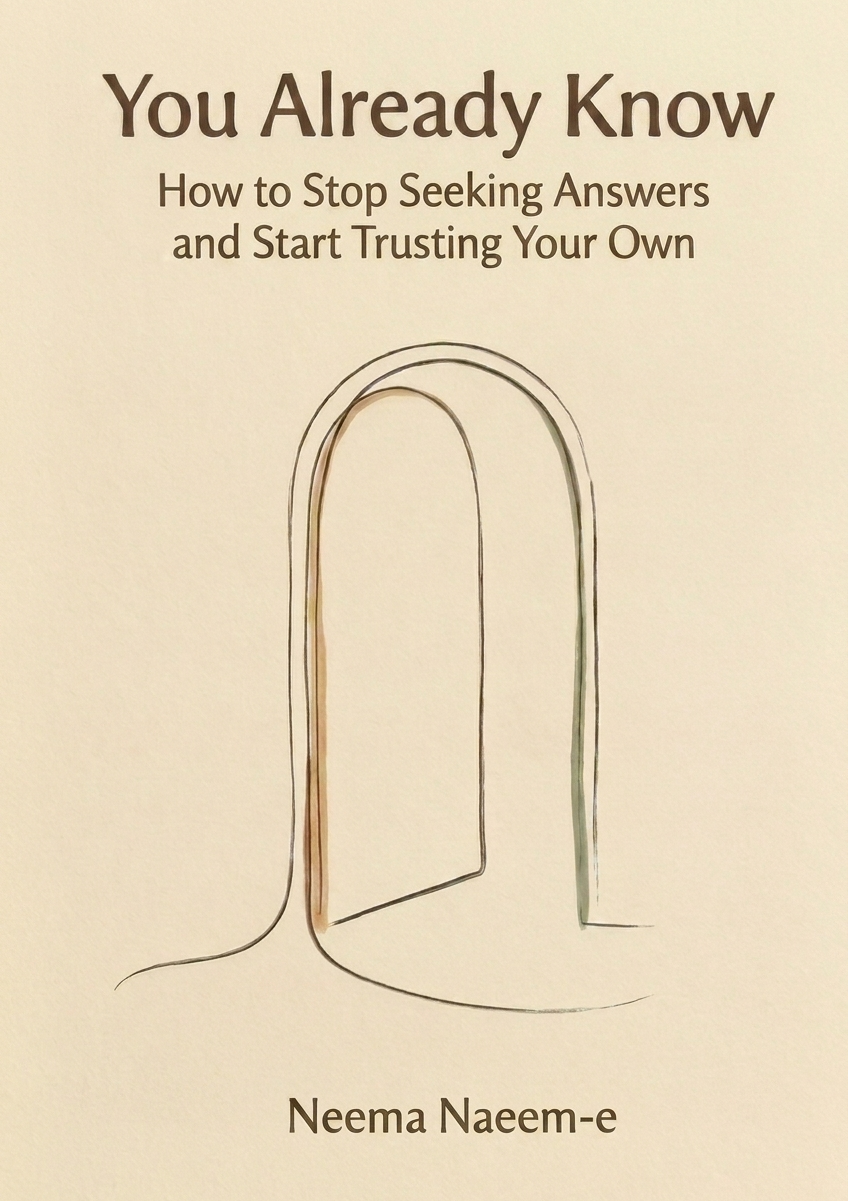
You know the feeling: something in you already knows, and then the questioning begins. You Already Know is about learning to recognize that first signal, distinguish it from the noise that follows, and trust yourself enough to act.
A question to bring with you
From the book
What this practice is really building
You've probably had the experience. You knew something wasn't right before you could explain why. You felt the no before you made the pros-and-cons list. You had the idea, then spent three days researching whether it was a good one. Maybe you asked five people about a decision you already had an answer to. Maybe you've also done the journaling, meditation, readings, retreats, therapy, coaching, or spiritual work, and still found yourself facing the same question: “But how do I know I can trust what I'm hearing?”
The problem isn't that you haven't done enough work. And it isn't that you're missing some final piece of wisdom. The problem is subtler: when your own knowing arrives, you may not yet trust it enough to let it count.
Maybe the thought sounds familiar: "I already knew the answer. I knew it before I asked. Why do I keep asking anyway?" Or perhaps: "My gut said no. I talked myself into yes. I knew how it would end." Or simply: "I don't trust myself with the things that actually matter."
Somewhere along the way, many of us learned that our own knowing doesn’t count until something outside us confirms it. Not as a conscious belief. As a habit.
The missing skill has never been wisdom. It's been the relationship with your own knowing.
When we’re uncertain, the instinct is often to look for more: more wisdom, a better teacher, a deeper practice, a clearer sign. It’s reasonable. We want something outside ourselves to make the uncertainty disappear.
But guidance is often not the missing piece. Something lands. We feel it. Then doubt moves in fast and reasonable-sounding and we go looking for permission. Someone confirms what we already sensed, and for a while, there’s relief.
Outside confirmation can settle the question. Sometimes that's exactly what we need. But if we never learn how to recognize our own signal without it, the next important decision can reopen the same doubt. The relief keeps coming from somewhere outside, which means the trust never has a chance to grow from within.
That relationship can be built. That's what this book teaches.
Something in you registers first. Then the mind begins its investigation. Was that intuition or fear? Am I overreacting? What would someone else do? Maybe I should wait. Maybe I should ask. Maybe I need one more sign.
So you reach outward. Sometimes the confirmation helps. Sometimes it introduces another opinion to negotiate with. Either way, if your own knowing never becomes part of the evidence you trust, the next decision can begin the cycle again.
Hear something. Doubt it. Seek confirmation. Feel relief. Encounter the next question. Repeat. That is the Confirmation Loop.
A reading, ceremony, meditation, journal, therapist, coach, or teacher can help you recognize something real. Sometimes outside guidance is exactly what helps you see more clearly.
But recognition and self-trust are not the same skill.
Outside guidance can support recognition. It cannot build your relationship with your own knowing for you.
The problem is not that you reached outward. The problem is when reaching outward becomes the only evidence you trust.
So you go back. You book another session, attend another retreat, buy another course, open the journal again. The experience may be valuable. You may genuinely learn something, feel something, or see yourself differently. But if there is no practice for bringing your own knowing into ordinary life, the next decision can still send you looking outside yourself for the final word.
That is how someone can do years of inner work, have extraordinary experiences, and still arrive at a very ordinary question: “But how do I know when to trust myself?”
The answer is not to stop seeking guidance. It is to develop the part of the practice that happens after insight arrives: hearing what is there, discerning it, acting on it, and learning from what happens.
That was the part I was missing too.
For a long time, I lived outside myself.
I was restless in a way I couldn't name. There was a constant noise inside: thoughts that arrived before I could catch them, ideas that didn't feel entirely mine, a knowing that something was pointing me somewhere I hadn't gone yet.
So I went looking. I read the philosophy. I found my way into spiritual practice. I trained as a practitioner and spent years guiding others into the Akashic space, holding space for their questions, offering what I received.
And somewhere in that work, something stopped me.
I could feel it happening in session after session: people arriving with a question, receiving something true, crying in recognition, going home, and not acting on any of it. Not because the insight was wrong. Because it had come from outside them. The recognition was real. But recognizing something through another person and learning to trust it in yourself were not always the same thing.
I had been doing the same thing. Training my mind to receive, but not my body to trust. Looking up and out for confirmation when the signal was already here, already speaking, already obvious, if I got still enough to feel it.
The realization that changed everything wasn't mystical. It was this: I had never posed a question to myself that I didn't receive an answer to. I just hadn't believed the answer was allowed to come from me.
That gap between receiving and believing. That gap is where this whole book lives.
Clarity isn't found. It's uncovered.
That's what the Akashic Gateway does.
The Gateway is the book's guided inward practice. You do not need a prior belief in the Akasha or energy work to use the practice. You can begin with what you actually notice in your own experience. The analytical mind quiets, not by force, but because it's been given something else to do. And in that quiet, your own signal becomes easier to notice.
Not vivid imagery. Not a voice from above. It may arrive as sensation, emotion, imagery, sound, memory, a felt yes or no, or simply a knowing you can't yet explain.
The Gateway works because self-trust can't be built through an idea. It has to become recognizable through experience, repeated enough that you become more familiar with what your own knowing feels like.
The Akashic Gateway is a body-centered inward journey through seven energy centers, using loving awareness, breath, resonant tuning, internal questioning, and practical tools to help you recognize how your own knowing reaches you.
"Neema is truly one of a kind! As a healer and event facilitator myself - I had an honor to experience gifts of many people, but Neema is one of those people who is just so in tune and connected with higher realms that allows him to access very deep and powerful knowledge that often is overlooked by many. I’ve had a pleasure to receive Akashic reading from him and he was incredibly on point and also bringing some new insights that allowed me to create greater level of peace within myself. Whether you’re looking to do online session with him or in-person work - go for it! Just his presence alone is very comforting, combined with his great capacity to hold space - will allow the shifts that you need to experience to take place."
"There's so much spiritual content out there written for people who already speak the language. This reached me before I had any of the vocabulary, and it still worked."
"My experience with Neema was life changing in so many ways. He is an amazing guide with such powerful intuition and connection to this field of knowledge. I was able to access wisdom and insight into things I had been grappling with for a long time, and felt a deep inner relief and understanding into some important aspects of my life. Neema is amazing at holding space and guiding with care, intention and grace. I’m excited for our next session as I continue to work with him!"
"I expected another guide to intuition that tells you to journal more and trust the universe. This is completely different. It asks you to actually sit with your body. Which is harder, and more useful. I cried at the section about speaking to yourself in 'we.' It sounds small. It isn't small."
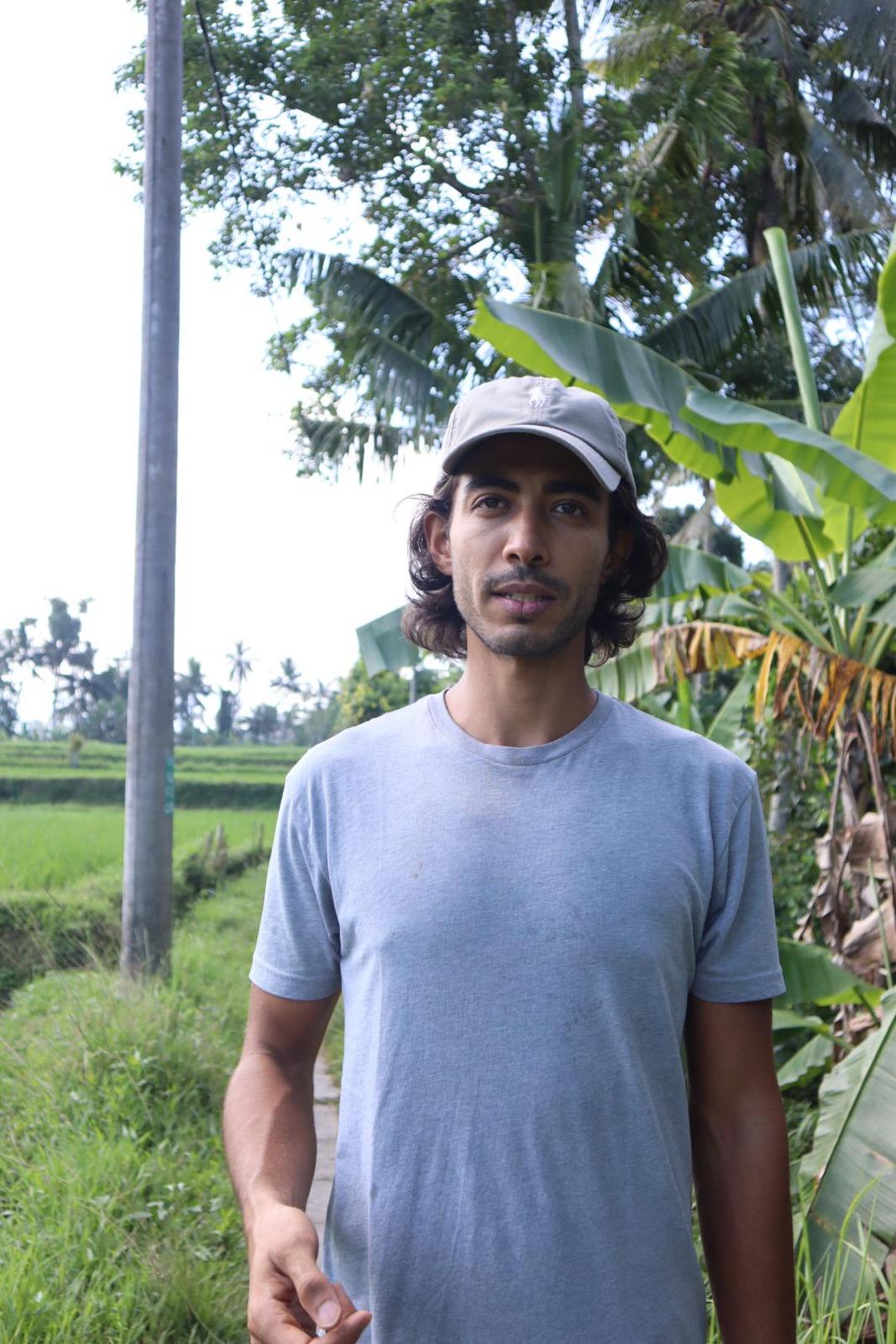
Neema Naeemi is a guide, gardener, engineer, and creator of the Akashic Gateway. After years of spiritual exploration and guiding others through the Akashic Records, he began noticing the same gap in his clients and himself: the answer could arrive clearly, yet doubt would send them searching again.
His work now explores that space between receiving and believing, helping people recognize how their own knowing speaks and build trust through lived experience.
His philosophy is simple: guidance should bring you closer to your own authority, not replace it. We're all just walking each other home.
You already know.